THE FLYING YEARS
Fifty years in the air — and not finished yet

The Begining
1975-1976
.jpeg)
It started with a magazine.
In 1975, Captain Vivek Mundkur of the Corps of Engineers, Indian Army, was posted at the College of Military Engineering in Pune when he came across an article about hang gliding in Popular Mechanics. The sport was barely five years old globally. In India, it was entirely unknown.
He wrote to his cousin in USA for construction drawings. They cost five dollars. What followed was an act of improvisation that defined the rest of his life.
The specified materials were not available in India. So he worked with what he had. Aluminium pipes from a hardware market in Pune. Fertilizer bag fabric — chosen because it could hold fifty kilograms on a hook without stretching. A borrowed workshop shed on the CME campus. Three to four months of building, measuring, adjusting, and rebuilding.
He signed an indemnity bond before the first test. When he asked experienced paratroopers and glider pilots to fly it first, they declined. So Vivek ran it himself across a football field until he could feel it pull against his weight and try to rise.
Then he drove with it to the Dighi Hills, north of Pune
The First Flight-Dighi Hills
1976

He had no formal flying training. No instructor. No reference point except the drawings, his own reasoning, and the behaviour of the glider itself.
He taught himself in stages. A few feet first. Then ten. Then thirty. Then a hundred. Each flight was also a lesson — about balance, wind, body position, and what the machine would and would not do. It took months.
The first flight from the top of the 500-foot hill lasted approximately two minutes. He floated down in silence and landed in a field at the bottom. A farmer working nearby stared at him. He thought Vivek had fallen from the sky.
That flight — made sometime around March 1976 — is now officially recognised as India's first hang glider flight. It is entered in the Limca Book of Records.
The CME School
1977 - 1989
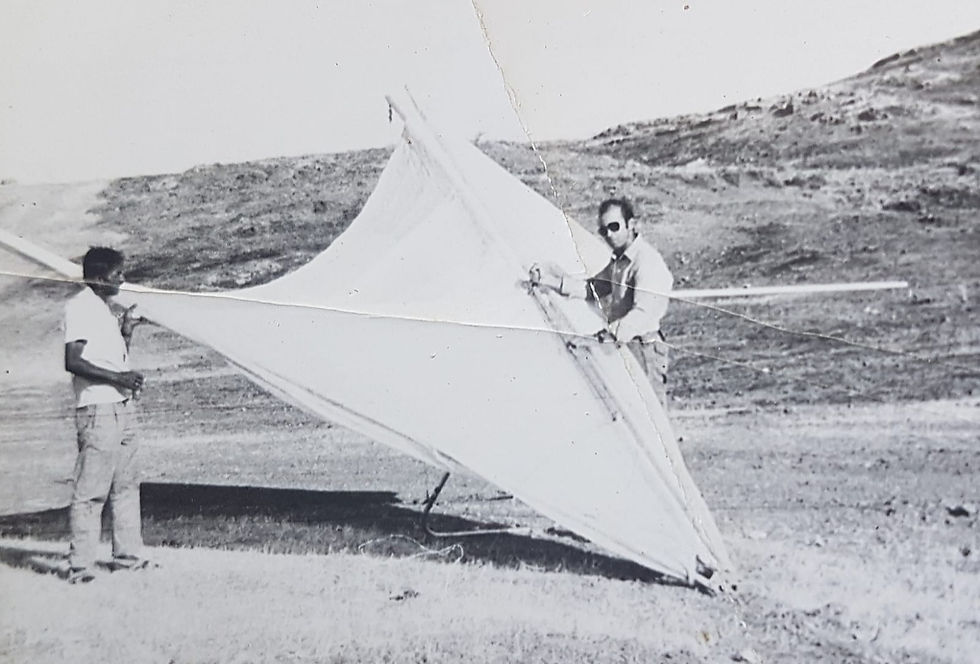
Word spread through the Corps of Engineers. Other officers and soldiers wanted to try. Vivek began teaching.
Over the following years he built twenty-five training gliders by hand at the CME workshop. He trained more than a hundred student volunteers. The CME Hang Gliding Club was formally established. A demonstration at Baner in 1981 drew thousands of spectators — army trucks, shamiana seating on the hillside, and the aerobatics of India's first qualified hang gliding instructors.
In 1981, India Today carried a five-page photographic feature on the school and its founder. Lieutenant General Surindra Nath Sharma, then Chief of Engineers, had arranged for Vivek to train as a qualified instructor in England in May 1979.
The programme was subsequently closed due to Vivek’s posting and by a change in orders. Vivek carried on.
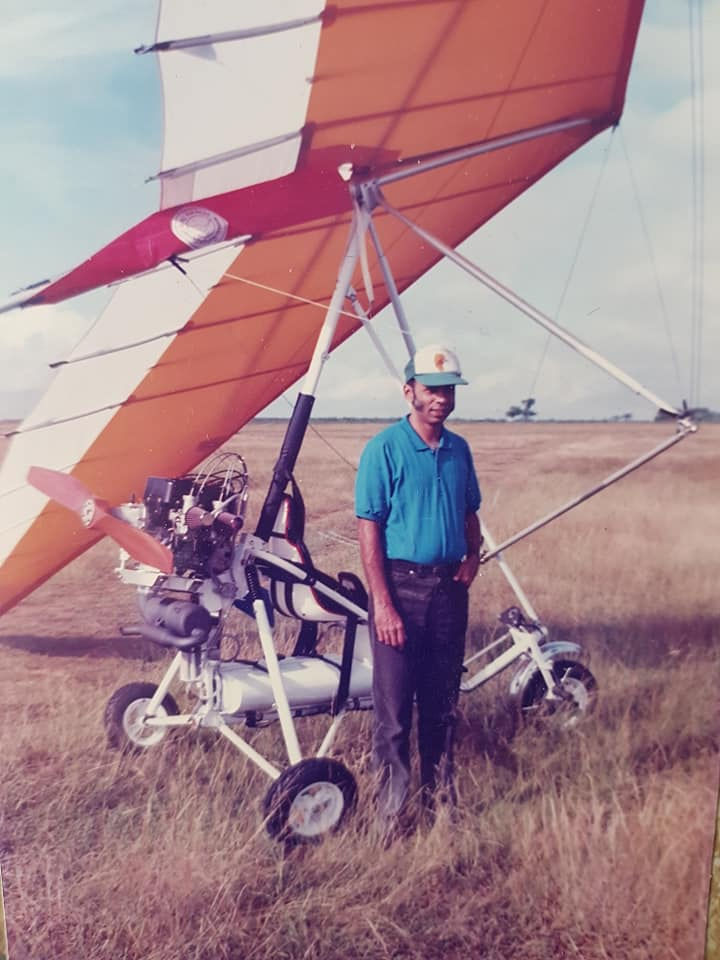
The Transition :
Paragliding and Powered Flight
Through the 1990s, as the technology of free flight evolved, Vivek moved with it. He learned paragliding. In Japan he learnt to fly a motorised backpack unit that allows a paraglider pilot to launch from flat ground and maintain altitude under power. He flew from beaches in Goa and Karnataka. He explored the growing international community of free-flight pilots, instructors, and engineers.
The Gap and the Return : 2004-2021
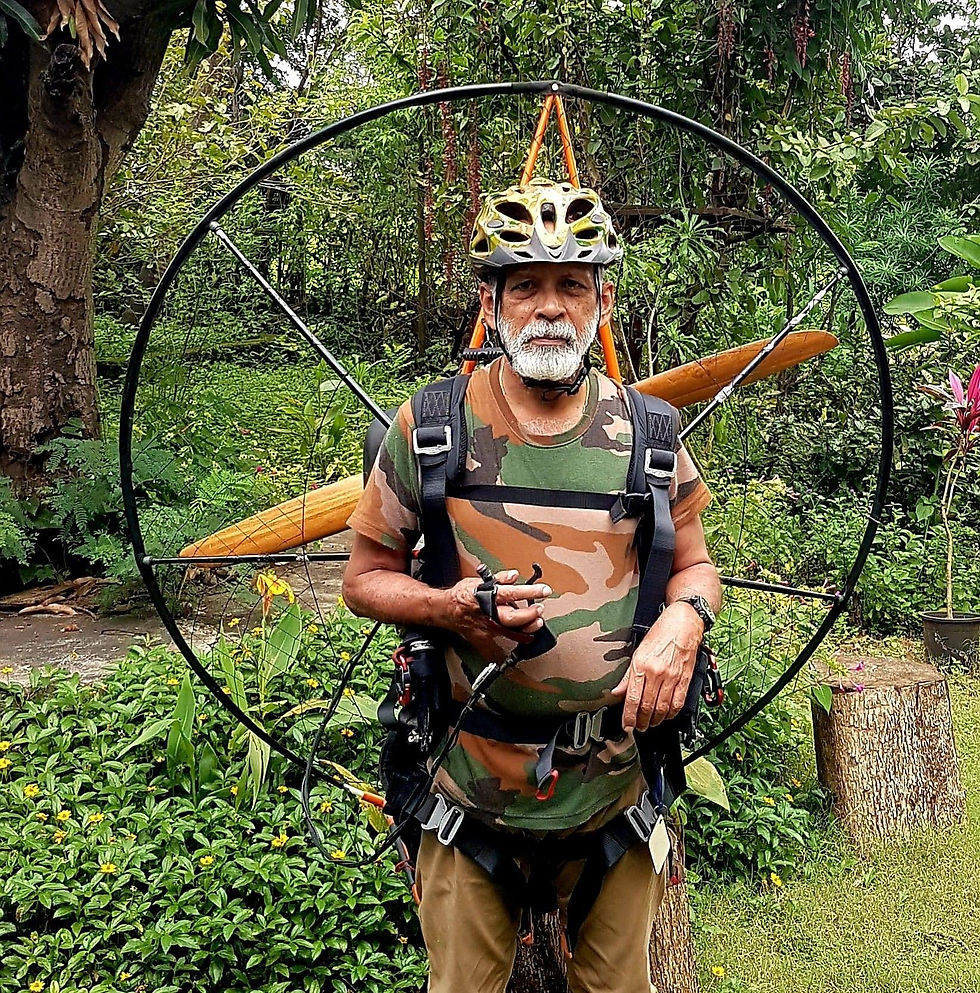
A serious hand injury in the early 2006 forced a long pause. Five-hour surgery. An uncertain recovery. Vivek stepped back from active flying for nearly eighteen years.
In 2021, at the age of 76, he decided to return to flying.
He began training again at Kamshet, Temple Pilots one of India's leading paragliding schools. He worked with Samson D'Silva, instructor and founder of Space Apple Paramotor Training in Vasai. He re qualified. He flew again. A documentary film — Air Risers, directed by Bidit Roy — recorded the journey.
In November 2026, at the age of 81, he plans to make a solo paraglider flight. This project — the book and film of Still in the Skies — is built around that flight as its defining moment.